
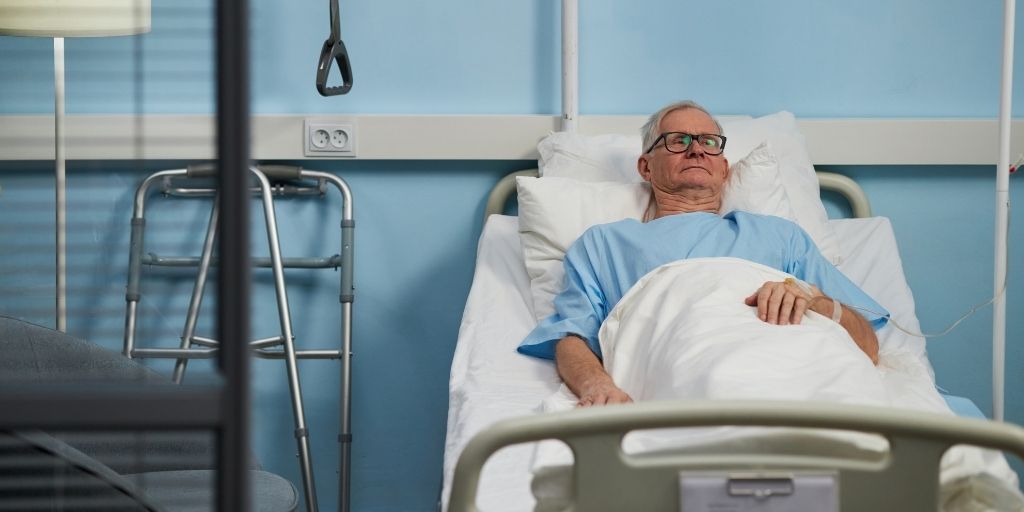
A report on the BBC News website has highlighted the staggering cost and impacts of failures to discharge millions of patients from hospitals across the country. The report cites NHS figures that say every day in England over 13 million patients whose treatment is complete are still in hospital beds.
However, one of the UK’s leading experts on medication non-adherence, Norman Niven, says the problem of hospital discharge cannot be solved without fundamental reform, especially around funding. “The structure of the current system inevitably results in friction between the NHS and local authorities.
“The newly created Integrated Care Boards are having significant funding concerns that have impacted their ability to deliver new services.
“They are now looking very carefully at services that make a real impact on the health and care sectors and, importantly, make financial savings and efficiency improvements.”
Integrated Care Boards (ICBs) were created to work with local authorities and hospitals to create joined-up community care.
The BBC report also notes the downstream effects of failing to discharge in a timely manner; beds are not available for routine surgical procedures, and there are long waits in A&E.
Norman Niven added; “The key issue, which is ever-present, is who pays for a discharge service that requires the cooperation of the health and care sector bodies?
“An obvious solution would be to take advantage of the now- integrated funding of services through the ICBs, who can promote such an approach.”
Local authorities spend around £32 billion per year on adult social care provision, a figure that has risen by £4.6 billion in real terms since 2010-11.
In the BBC report, Kerrie Allward, who acts as a policy lead for the Association of Directors of Social Services, said; “Councils often lack the funds to invest in integrated services that would support more timely discharge.”
In addition, she says that some NHS leaders blame social care for delayed discharges, adding; “This blame can strain relationships, especially as data reveals that social care is usually responsible for only a minority of delays.”
In a report produced for the Commons Library in 2019, before the pandemic made everything worse, it was noted that, “The UK is experiencing increased demand for NHS and social care services. An increasing number of people are living longer with multiple long term health conditions, and require support from a wide range of services at home, in the community and in hospitals.”
Meanwhile, in a report from July 2023, Age UK noted: “2.6 million people in England aged over 50 are unable to get care.”
In an attempt to address the problem, Norman Niven proposes the creation of a new body, a single ‘Health and Care Unified Discharge Programme’. He says; “Given where we are, and what’s already in place, it would seem logical to take advantage of the ICBs to define and implement this new service, which would be funded directly by government.
“This imagined new service envisages the health and care sectors being equal partners in delivering a single, unified discharge service programme, no longer a piecemeal, fractured association of individual services that have been stitched together.
“This unified service would bring health and care sectors together, with a clear mandate to implement a programme that benefits the NHS, social care sector, and – most importantly – patients.”
For more information about The Medication Support Company, please visit https://medicationsupport.co.uk/.