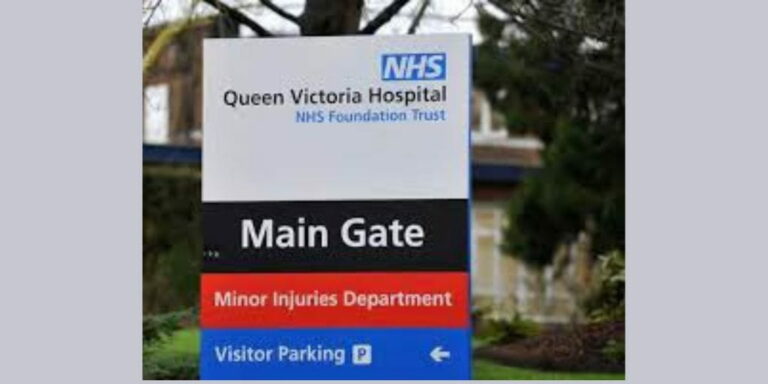
Queen Victoria Hospital NHS FT successfully delivers Archie EPR, electronic patient record (EPR) system in partnership with Altera Digital Health to help improve productivity and efficiency using digital technology to enhance patient care.
The Minor Injuries Unit (MIU) service led the way for digital adoption, staff adapted quickly and used digital record keeping for their patient’s clinical notes. It helped them to maintain patient information to share with other QVH services within the hospital.
The continued success in MIU coincides with Archie EPR being officially three months old, and has already previously been hailed as one of the smoothest transitions by our Chief Operating Officer (Kirsten Timmins) as one of the most successful digital deliveries of an EPR system she had witnessed.
Continuing to deliver improvements for minor injuries services
The MIU unit receives over 16,465 patient visits per year (2025 figures) with a large proportion requiring follow up visits for additional treatment in other services within QVH or other hospitals.
The Trust recorded a 99.5% productivity rate (December 2025) for the number of patients it treated within 4 hours. Despite the busy winter period and the introduction of a newer way of working with digital technology, they exceeded their targets.
Working digitally is huge shift from how they previously operated and the team have now developed an effective digital workflow to support planning, coordination and delivery of patient care utilising Archie EPR.
There have been several key operational changes since go-live:
Reduction in the use of paper documentation from day one
Improved real-time visibility of patients visiting MIU including easy access to data relating to patients who may require further treatment or repeated occurrences at the MIU
Reduced duplication across clinical, administrative and operational teams.
NHS England funding from the Frontline Digitisation programme will continue to support QVH to deliver future optimisation and improvements, to ensure alignment with national NHS England priorities around (source NHS 10 Year Health Plan):
Reducing administrative burden on frontline staff; and
Using digital systems to support operational decision-making.
Desire Forde-Gaskin, MIU Clinical Services Manager at Queen Victoria Hospital NHS Foundation Trust, said:
“We saw noticeable changes from the first day of go-live, particularly through the rapid reduction in paper-based working. Archie EPR has essentially changed how our teams plan and coordinate care.
Being able to access other digital clinical systems through the integrated clinical systems tabs in Archie EPR, benefits the patient’s pathway and gives us more time to care especially when we have a growing demand for our services. It also helps us to continue treating patients within the national mandated 4 hour wait time.
The real value of an EPR is not digital record-keeping alone, but how it supports operational control in a busy department like MIU. As the system matures, we expect to establish further efficiencies and cost benefits that are increasingly important for us as a service and the wider NHS.”
Dermot Ryan, NHS England’s Director of Digital Transformation said:
“The launch of Queen Victoria Hospital NHS Foundation Trust’s first EPR system represents an important milestone in their digital transformation journey. I’m pleased to see the investment already delivering benefits for staff and supporting safer, more efficient care for patients.”
The Trust plans to continue monitoring the impact on overall efficiency, making improvements through optimisation, improving theatre productivity, patient experience and sustainability outcomes. Sharing learnings with the wider NHS as part of digital and productivity programmes.