
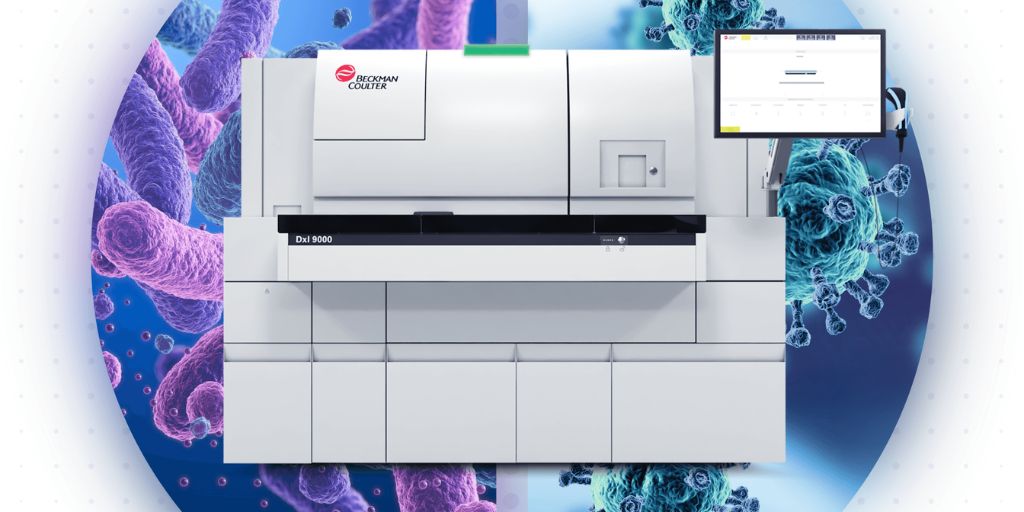
Beckman Coulter Diagnostics, a Danaher company and global leader in clinical diagnostics, today announced it has received CE 2797 Mark under IVDR for the Access MeMed BV assay, enabling broad availability of a high-throughput host‑response test that helps clinicians differentiate between bacterial and viral infections in approximately 20 minutes.
Validated for use across Beckman Coulter’s installed base of DxI 9000 and Access 2 immunoassay analysers, the Access MeMed BV assay enables fast, reliable infection differentiation while leveraging laboratories’ existing infrastructure and workflows. Beckman Coulter partnered with MeMed, a leader in advanced host‑response technologies, to bring the proven MeMed BV® test into core laboratory settings. The MeMed BV test has been shown to enhance clinical decision‑making, support clinicians in curbing unnecessary antibiotic use, and advance antimicrobial‑stewardship initiatives—results reinforced by strong clinical studies and real‑world performance data.
Published MeMed economic data, together with incidence estimates for lower respiratory tract infections (LRTI) and community‑acquired pneumonia (CAP), indicate that European healthcare systems shoulder significant avoidable costs each year. With Access MeMed BV now available on Beckman Coulter’s extensive installed base across Europe, healthcare systems have a scalable, practical path to help potentially reduce up to £70 million in avoidable costs through reductions in unnecessary admissions and diagnostic testing.
“By delivering rapid, highly reliable bacterial and viral differentiation on routine immunoassay systems, we’re empowering care teams with the timely insights they need to guide appropriate treatment decisions, while optimizing laboratory efficiency using existing workflows,” said Melissa Naiman, Medical & Scientific Affairs at Beckman Coulter Diagnostics.”
“This collaboration with Beckman Coulter significantly accelerates our mission to make host-response testing available at scale,” said Eran Eden, CEO & Co-founder, MeMed. “The MeMed BV test has repeatedly demonstrated its ability to improve clinical decision making, empower clinicians to reduce unnecessary antibiotic use, and support antimicrobial stewardship, backed by robust clinical and real-world evidence. Making the assay available on high-throughput laboratory analysers allows healthcare systems to unlock those benefits for far more patients.”
Fast Insights Guides Confident Clinical Decisions
Bacterial and viral infections frequently present with similar symptoms, making early differentiation challenging and sometimes leading to inappropriate patient management or unnecessary antibiotic use. Early distinction is critical because clinicians often must prescribe treatment before traditional diagnostic methods—which can take hours or days—to deliver definitive results. The Access MeMed BV assay provides actionable bacterial vs. viral insights in approximately 20 minutes, using Beckman Coulter immunoassay analysers to generate rapid results at scale.
Recent real-world studies across nearly 6,000 adult and pediatric patients found that clinicians face uncertainty about antibiotic prescribing in approximately 16–29% of cases. Following receipt of MeMed BV results, physicians reported that the test supported or changed clinical decision-making in approximately 82–87% of cases. In prior blinded multicentre validation studies, MeMed BV demonstrated up to 99% negative predictive value (NPV) as an aid in excluding bacterial infection.
Reducing Costs, Hospitalizations, and Unnecessary Antibiotic Use at Scale
Challenges in accurately identifying bacterial versus viral infections early can drive downstream healthcare costs, unnecessary admissions, and repeat testing. Independent health‑economic modelling highlights the potential value of incorporating MeMed BV into routine care.
For every 1,000 patients evaluated for suspected community-acquired pneumonia (CAP), incorporating MeMed BV into clinical decision-making generated substantial efficiencies. In adults, the model showed £134,018 in total cost savings, while paediatric care realized £105,750 in avoided costs. These financial gains were driven by more targeted antibiotic use, reduced hospitalizations, and fewer diagnostic procedures—resulting in streamlined care pathways and lower resource consumption.