
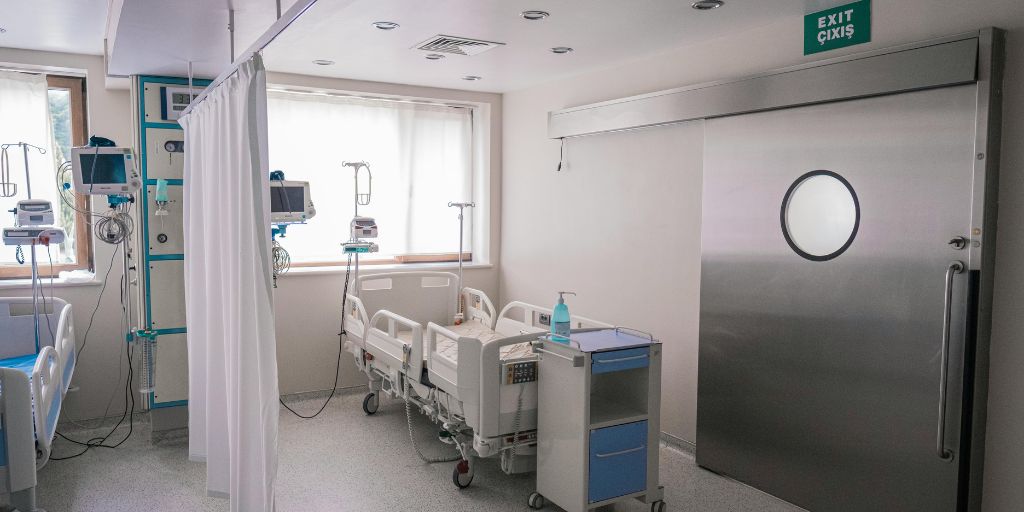
Hospitals already work hard to prevent falls and pressure injuries, but the numbers show why extra help is welcome: AHRQ estimates 700,000 to 1 million hospitalized patients fall each year in the US.
That’s where the thought of smart hospital bed technology 2026. The most useful upgrades aren’t flashy. They’re practical add-ons that continuously sense movement and pressure, then send timely prompts to staff so risks are spotted earlier and acted on more consistently. Along the way, we’ll look at what the evidence says about the scale of the problem, why prevention works best as a team sport, and how policy is nudging hospitals toward safer care.
Beds That Talk Back
If you’ve ever stayed in a hospital, you’ll know the bed is the center of the room. You eat there, rest there, try to sleep there, and sometimes attempt your first shaky trip to the bathroom from there.
From a safety point of view, that’s important because falls aren’t rare. AHRQ’s PSNet primer summarises epidemiologic studies showing falls occur at 3 to 5 per 1,000 bed-days in healthcare facilities. It’s also not “just a fall.” The same AHRQ primer notes that more than one-third of in-hospital falls lead to injury, including serious outcomes such as fractures and head trauma.
So what’s so special about cutting-edge hospital bed technology? If risk often shows up around the bed (getting in, getting out, shifting position, attempting to stand), then the bed is a logical place for continuous sensing. That can mean detecting an unsafe bed-exit attempt early enough for help to arrive, or identifying restless movement patterns that suggest confusion or medication effects. The value isn’t drama. It’s consistency, especially overnight, when staffing is leaner and patients are tired.
Additionally, fall rates vary across hospitals and units. A 2023 retrospective acute-hospital study reported 1.5 falls per 1,000 patient-days and 0.4 falls with injury per 1,000 patient-days in its dataset, along with modelling of risk factors such as age and length of stay.
That range is actually encouraging. It suggests prevention is workable, measurable, and responsive to how care is organised.
Pressure Points Getting Solved
Pressure injuries (bedsores) have an image problem. People tend to think of them as old-fashioned, or as a sign someone “wasn’t taken care of.” In reality, they’re a persistent clinical challenge that good teams actively manage.
A 2023 clinical review in American Family Physician reports more than 3 million pressure injuries are treated in the United States each year. The same review estimates hospital-associated pressure injuries cost the US health system $26.8 billion annually. That translates into pain, infection risk, longer recoveries, and complicated discharge plans.
The hospital bed technology 2026 conversation is positive because it’s about earlier signals. Continuous pressure and immobility sensing can support the everyday work of prevention: noticing when someone hasn’t shifted for too long, flagging higher-risk patterns, and helping staff prioritise repositioning when multiple competing needs hit at once.
It also fits with what the clinical literature already emphasises. The American Family Physician review describes prevention focusing on repositioning and providing appropriate support surfaces, and it notes that high-specification foam mattresses are more beneficial than regular foam mattresses for at-risk individuals.
Smart-bed add-ons don’t cancel out the importance of good mattresses and turning schedules. They can make those routines easier to deliver reliably, and easier to explain to families who want to know what’s being done and why.
Tech Works in Teams
The best results usually come from bundles of improvements, not one gadget.
A 2024 paper in BMJ Open Quality reviewing implementation strategies reported post-intervention fall rates ranging from 0 to 13 per 1,000 patient-days (median 2.6), and it reported a median change of −0.9 per 1,000 patient-days across included studies.
That range tells a practical story. Some settings achieve major reductions. Others get smaller gains. The difference often comes down to how well the pieces connect: risk assessment, environment, staff response, patient education, escalation routes, and yes, technology.
This is where hospital bed technology 2026 can shine without hype. They’re not meant to create a new “job” for nurses. They’re meant to strengthen the chain between noticing risk and acting on it. A prompt that arrives at the right moment, to the right person, in a way that fits the ward workflow, can be a genuine relief. That’s not futuristic. It’s operational.
A good question to keep in mind is, does the system make it easier for staff to do the right thing quickly, or does it simply generate more noise?
Safety That Gets Funded
In the US, prevention isn’t only a clinical priority. It’s also tied to how hospitals are judged and paid.
CMS explains that under the Hospital-Acquired Condition (HAC) Reduction Program, payments for subsection (d) hospitals with a Total HAC Score above the 75th percentile (the worst-performing quartile) are reduced by 1 percent. CMS also indicates the program uses the CMS PSI 90 composite, which includes PSI-03, the Pressure Ulcer Rate measure.
This policy context is worth considering because it supports investment in prevention infrastructure. When a hospital funds better support surfaces, staff training, and monitoring tools, the intent is aligned: fewer patient harms, better outcomes, and fewer avoidable costs.
For families, this can be reframed in a healthy way. A hospital doesn’t need to “wait” for a high-profile incident to justify safer beds. There are clear incentives to prevent harm as a normal part of quality care. The best providers then go a step further and communicate what they’re doing, so patients don’t feel left in the dark by a web of devices and alarms.
So, What’s New in 2026?
When people hear “smart bed,” they sometimes imagine a luxury product. In practice, the more meaningful progress is about targeted safety functions: monitoring, pattern recognition, and clearer prompts that support bedside decisions.
You can see the market moving in that direction. In June 2025, Practical Patient Care reported that NthJEN launched smart bed technology aimed at helping prevent bedsores and falls.
That doesn’t prove outcomes on its own, but it’s a credible sign that vendors are prioritising this exact use case: harm prevention through bed-based sensing and alerts.
If you’re a patient or a family member, the most empowering move is to ask calm, specific questions. Not to interrogate staff, but to understand the system around you and collaborate with it.
- How does the unit identify fall risk, and does that change how the bed is set up?
- If there are bed-exit alerts, who receives them and how quickly are they typically answered?
- How does the team balance alerts with rest and sleep, especially at night?
- What’s the repositioning approach for pressure-injury prevention, and how is it documented?
- What support surface is being used, and why was it chosen for this patient?
- If mobility is encouraged, what’s the safest way to call for help before standing?
Those questions do two useful things. They prompt clear explanations, which reduces anxiety. They also signal that you’re engaged, which can improve communication in busy settings.
One quiet benefit of smarter beds is that they make prevention more visible. When a bed is clearly set up for safety, and staff can explain how it supports fall and pressure-injury prevention, trust tends to rise. And trust is not a soft outcome. It affects whether patients call for help, whether families follow guidance, and whether everyone stays aligned when the ward is under pressure.
The Bed Becomes a Teammate
The best way to think about smart hospital beds in 2026 is as practical safety infrastructure: always present, closely tied to the moments when risk spikes, and designed to support prevention that already has a strong evidence base.
Falls remain common in hospitals, with AHRQ estimating 700,000 to 1 million inpatient falls each year, so tools that improve timely response and consistency have real room to help Pressure injuries also remain common and costly, with American Family Physician citing more than 3 million treated annually and an estimated $26.8 billion yearly burden, making better pressure and immobility monitoring a sensible focus.
Looking ahead, the most promising hospitals won’t treat the smart bed as a showpiece. They’ll treat it as part of a calm, well-run prevention system that patients can actually understand. CMS’s HAC program creates a strong financial nudge toward that kind of prevention-first approach, which can accelerate adoption of better tools and clearer workflows.
And if the bed can help staff catch risk earlier, reduce preventable harm, and make safety easier to explain at the bedside, why wouldn’t we want that kind of progress in every room?