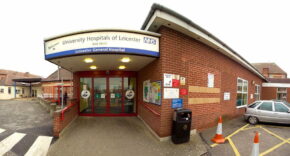
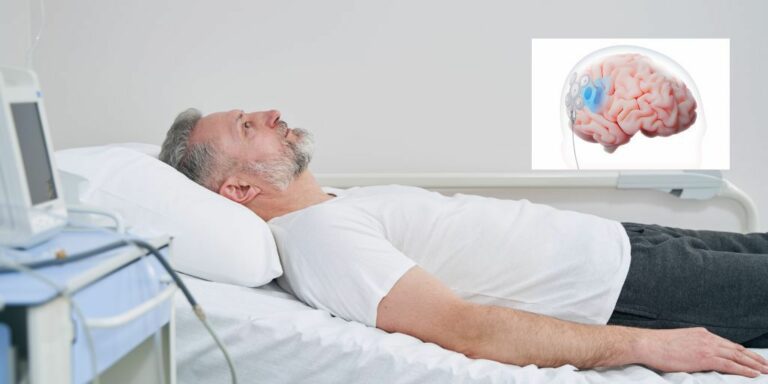
London, UK — Great Ormond Street Hospital (GOSH) is joining the major European clinical study EASEE4YOU, which is exploring a new, gentle therapy designed to help adolescents whose epilepsy does not respond to medication.
The study focuses on the EASEE® System, a small, discreet medical device placed under the skin that aims to support more stable brain activity and reduce seizures. Because it sits just beneath the scalp—with no need to open the skull—and uses very soft, low-level signals, it is considered a minimally invasive and patient-friendly option compared with more traditional surgical treatments.
While the device is already approved for adults in Europe, EASEE4YOU is the first study to evaluate its use in young people aged 12 to 17.
Drug-resistant epilepsy can have a profound impact on the daily lives of young people and their families. The goal of the study is to gather the evidence needed to make this therapy accessible to adolescents, offering hope for better seizure control and improved quality of life.
Mr Martin Tisdall, Consultant Paediatric Neurosurgeon at Great Ormond Street Hospital, said:
“We’re pleased to be joining this research programme, as at Great Ormond Street Hospital we see first-hand the impact treatment-resistant epilepsy has on young people and their families. Taking part in EASEE4YOU allows us to explore a gentle, minimally invasive treatment option, and we hope this research will pave the way for safer, more effective solutions that improve quality of life for these young people.”
Across Europe, more than 150 adults have already received the EASEE® device, with doctors reporting encouraging improvements in seizure management. Its design allows it to work continuously in the background without interfering with daily activities, sports, or schooling.
EASEE4YOU is enrolling 35 adolescents across Germany, Austria, and the UK. After a short monitoring phase, participants receive the small device, which begins providing support one month after placement. They are then followed with regular check-ins for up to three years.
The main goal of the study is to understand how many participants experience at least a 50% reduction in seizures within the first six months.
Karl Stoklosa, CEO of PRECISIS, said:
“We are proud to see the EASEE4YOU study expand to the United Kingdom with the involvement of Great Ormond Street Hospital—one of the world’s foremost centres for paediatric neuroscience. Adolescents living with drug-resistant epilepsy urgently need more options. By evaluating this gentle, minimally invasive therapy, we are taking an important step toward providing new hope for young people and their families.”
He added:
“Our aim is to build strong clinical evidence so this therapy can become available to adolescents across Europe. The commitment of the teams at GOSH and other centres gives us confidence that together we can improve the future of epilepsy care.”
Initial study results are expected in 2027.